
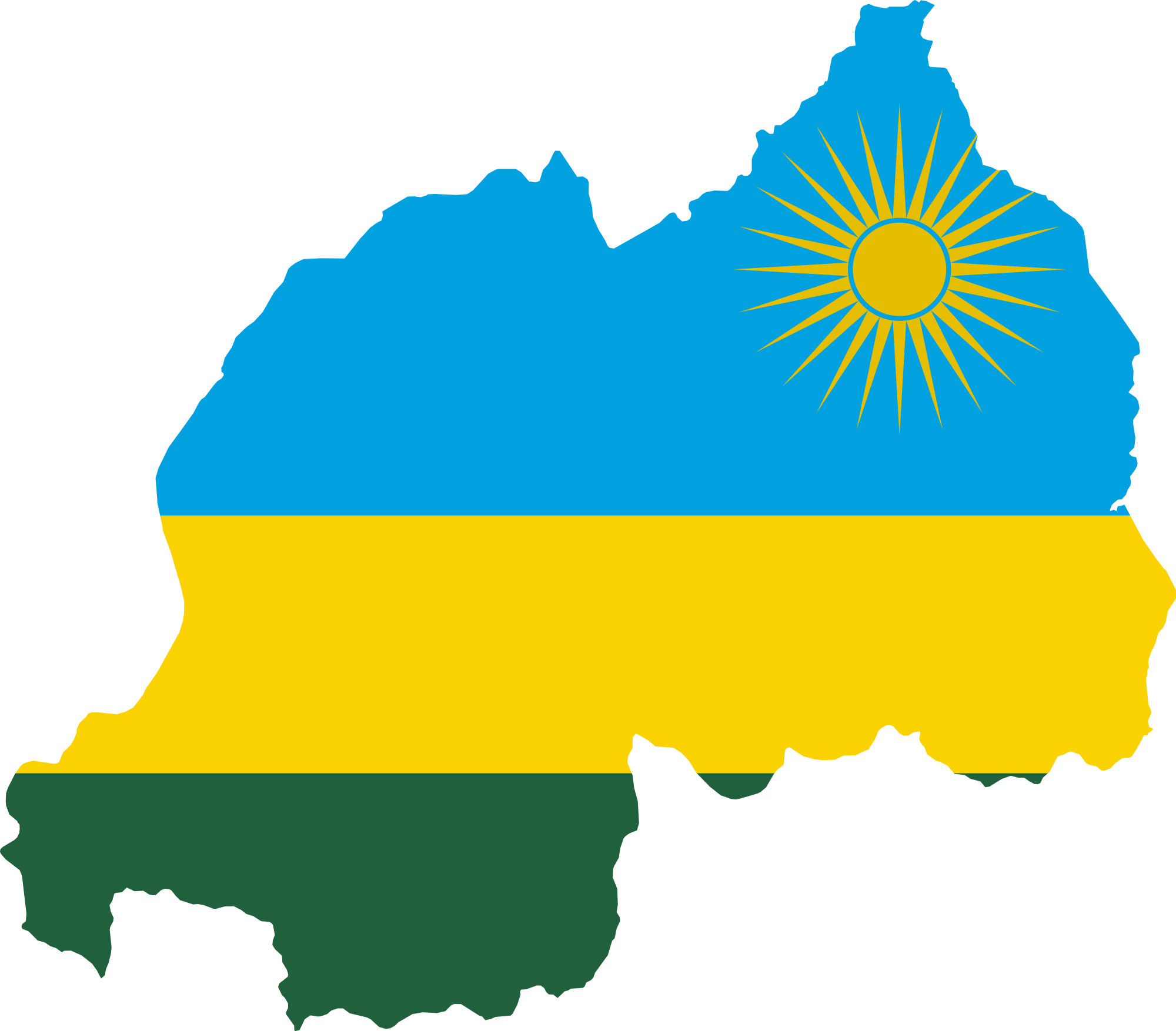

Rwanda has opened Mining Week 2025 with a bold pitch to global investors, positioning itself and the wider East African region as a rising powerhouse for critical minerals needed to fuel the global shift to clean energy, electric mobility and advanced digital technologies.
Speaking at the opening ceremony on December 2 at the Kigali Convention Centre, officials underscored Rwanda’s transformation from artisanal mining to a more mechanized, technologically driven and value-adding industry while calling for deeper investment, exploration and regional cooperation to unlock the region’s vast untapped potential.
The four-day event has convened global investors, policymakers, mining companies, financial institutions, technology providers and development partners.
Mining now central to Rwanda’s economic future

Alice Uwase, CEO of the Rwanda Mines, Petroleum and Gas Board (RMB), said minerals remain “a blessing” that must be developed responsibly and strategically.
“We are advancing towards mechanized mineral extraction, on-site beneficiation and advanced value addition,” she said, highlighting the operational gold, tantalum and tin refineries that differentiate Rwanda from many regional peers.
She stressed that Rwanda aims to build a mining sector that attracts responsible investment, upholds environmental sustainability, supports economic transformation and contributes to next-generation technologies and green solutions.
Uwase also thanked international investors and technology partners for their role in shaping the sector’s growth, while urging deeper scientific research and skills development to sustain progress.
“To unlock the vast potential of our mining sector, we have to deepen our investment in technology and geoscientific knowledge,” she said. “I call on each of you to join hands with us in building a mining sector that is inclusive, transparent, productive and globally competitive.”
East Africa’s critical minerals advantage

Delivering a regional geological outlook, senior geologist Justin Uwiringiyimana highlighted East Africa’s exceptional abundance of minerals essential for electric vehicles, AI hardware, semiconductors and renewable energy systems.
He pointed to the U.S. Geological Survey’s 2025 list of critical minerals including lithium, tantalum, tin, tungsten, cobalt, nickel, copper and graphite, many of which are found across Rwanda, Burundi, DRC, Tanzania, Uganda and Kenya.
“Our region is making a strong presence on the global production lists despite artisanal and small-scale operations,” he said. Rwanda alone ranks among the world’s top producers of tungsten and has significantly improved tin and tantalum output.
Mechanization, he said, is proving transformative.
“At Nyakabingo, production jumped from 15 to 20 tonnes a month to over 100 tonnes with simple mechanization. The same happened at Rotongo and Musha,” he noted.
Uwiringiyimana said East Africa’s potential remains largely untapped, with geological belts such as the Karagwe–Ankore Belt hosting major deposits. He emphasized that the region benefits from a young and trainable workforce and expanding mining education programs.
He also outlined challenges such as limited processing plants, gaps in transport and energy infrastructure, financing constraints and shortages of highly specialized skills. Yet he added that these constraints represent opportunities for investment.
“East Africa is rapidly emerging as a premier global source of ethical, low-carbon and strategically vital minerals,” he said in closing.
Rwanda unveils new data and investment opportunities

RMB Board of Directors Chairperson Itzhak Fisher said the global demand surge for critical minerals makes Rwanda’s role increasingly important.
“Rwanda continues to be a responsible and reliable source of critical minerals including tantalum, tin, tungsten, high-grade lithium, beryllium, rare earth minerals and gold,” he said.
Exploration is underway across 52 target areas, with new geological findings being packaged into investor-ready information.
Fisher announced that Rwanda will launch its second Mining Investment Pitch Book this week, bringing ten new concessions to market. Earlier this year Rwanda awarded seven concessions, its first since 2004.
“As I just said, tomorrow we are coming out with ten new pitch books immediately after Mining Week. We are open for business,” he noted.
He added that Rwanda is advancing efforts to connect remote mines to the national electricity grid and improve access to equipment and explosives as part of its modernization agenda.
Technology set to define the next phase of growth
Fisher emphasized that smart mining is now a requirement rather than an option.

Rwanda is encouraging the adoption of artificial intelligence, automation, robotics, IoT sensors, 5G connectivity, drones and data-driven systems, which he said present major opportunities for global technology companies.
He also highlighted Rwanda’s safety, stability and investor-friendly environment.
“We hope this will not be your only visit to Rwanda. We want to see you as future investors and operators in our country,” he said.
A region poised for global relevance
As the world accelerates its transition to clean energy and digital technologies, Rwanda and its East African neighbours are positioning themselves as essential suppliers of the minerals that power this transformation.
With fresh geological data, new concessions, modernized mining operations and a push for value addition, Rwanda says it is ready to become one of the most important sources of critical minerals, provided investment flows in at the required scale.
Mining Week 2025 continues until December 5 with panels, field visits and investment sessions expected to shape Rwanda’s next phase of growth in the global minerals economy.


Leave a Reply