

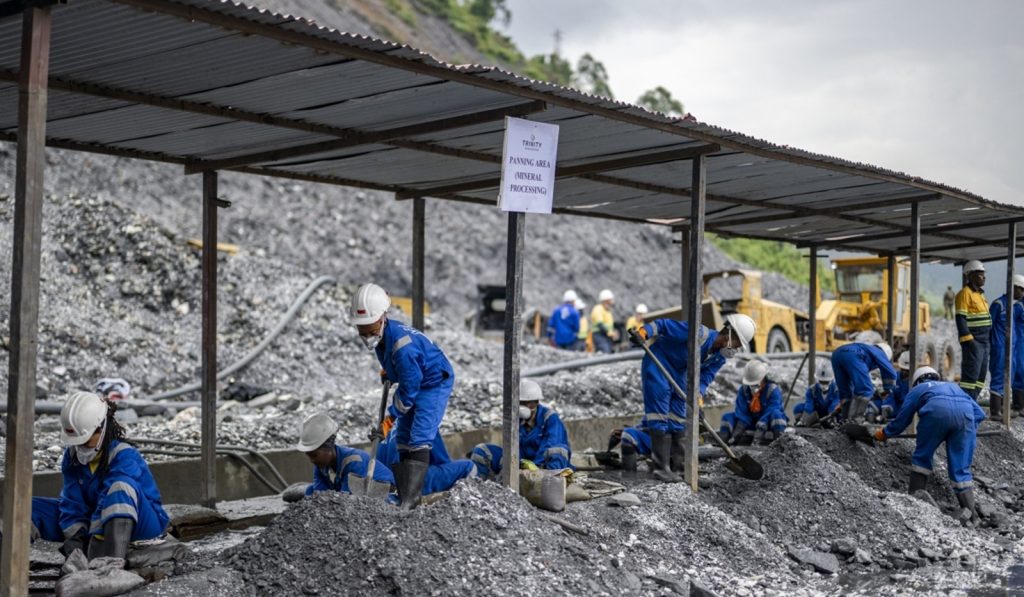
Although Rwanda is one of the smaller countries on the African continent and is largely mountainous, it possesses valuable mineral resources that continue to play a significant role in the country’s socio-economic development.
Over the past years, the mining sector has emerged as one of Rwanda’s key economic pillars, contributing to job creation, government revenue, and the development of critical infrastructure.
The Government of Rwanda has placed strong emphasis on the mining sector through policies aimed at ensuring the sustainable and environmentally responsible use of natural resources while maximizing benefits for the population. In this context, national leaders continue to highlight the country’s mineral potential and the strategies put in place to further develop the sector.
Speaking during the recent National Dialogue Council (Umushyikirano), held under the theme “Striving for Sustainable Development,” the Chief Executive Officer of the Rwanda Mines, Petroleum and Gas Board (RMB), Ms. Alice Uwase, emphasized Rwanda’s capacity and opportunities in mineral resources. She noted that minerals are found in many parts of the country and have strong potential to further contribute to sustainable development.
Ms. Uwase revealed that research conducted by RMB indicates that nearly 80 percent of Rwanda’s districts contain various types of mineral resources.
According to her, this highlights the sector’s strong potential to remain a major pillar of the national economy while improving the livelihoods of citizens. “Despite being a small and mountainous country, Rwanda is endowed with mineral resources of international value. This makes the mining sector one of the key drivers of the country’s sustainable development,” she said.
She further explained that Rwanda’s minerals, many of which are competitive on international markets, generate foreign exchange earnings that support national development programs, including the construction and improvement of infrastructure such as roads, energy facilities, and other essential services.
Ms. Uwase added that the Government has established policies and strategies to promote modern, efficient, and environmentally friendly mining practices. These measures aim to prevent illegal mining activities and protect natural resources from degradation.
Highlighting the sector’s contribution to employment, she noted that mining activities provided jobs to more than 92,000 people across the country in the past year alone. This has played a significant role in reducing unemployment and enhancing citizens’ capacity for self-reliance.
Furthermore, the mining sector generated over 129 billion Rwandan francs in government revenue, funds that support development initiatives in key sectors such as health, education, and infrastructure.
She concluded by reaffirming that the Rwanda Mines, Petroleum and Gas Board will continue to work closely with various stakeholders, including private investors and local authorities, to promote sustainable mining practices that benefit the country, its people, and the environment in the long term.

Leave a Reply