
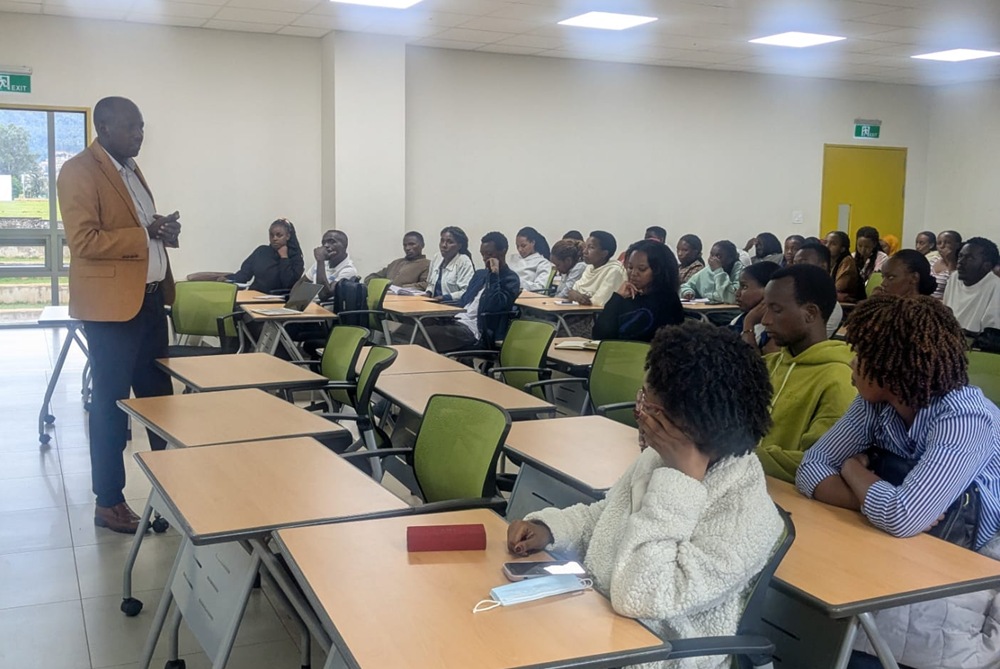
KIGALI — On March 18, 2026, Eng. André Mutsindashyaka, Secretary General of the Rwanda Extractive Industry Workers Union (REWU), delivered a pivotal guest lecture to students and faculty at the University of Rwanda’s School of Mining and Geology. The presentation, titled “Bridging the Skills Gap: Integrating Experiential Knowledge with Formal Qualifications for Modernized Mining Industry,” outlined comprehensive strategies to professionalize and modernize a sector that currently employs approximately 92,000 workers across the country.
Addressing the Industry’s Core Challenge
Despite its vast workforce, the Rwandan mining industry faces significant hurdles regarding formal education and skill recognition. During his presentation, Eng. Mutsindashyaka pointed out that the majority of mineworkers have not progressed in formal education, a reality that leads to a “skills mismatching with their employment, poverty and inequality in terms of remuneration.”
He highlighted a stark divide in the current workforce, noting an “imbalance between Experience & Formal learning.” Mutsindashyaka explained that while experienced older workers possess strong practical knowledge, they often lack formal certification. Conversely, new graduates bring strong academic knowledge but frequently lack practical field experience. This disconnect creates operational and knowledge gaps, especially as technological advancements increasingly require new digital and technical competencies.
The Power of RPL Certification
To combat these disparities, REWU—in collaboration with government institutions like the Rwanda TVET Board (RTB), the Rwanda Mines, Petroleum and Gas Board (RMB), and MIFOTRA—has heavily promoted the Recognition of Prior Learning (RPL) program.
Between 2022 and 2025, a total of *4,850 mineworkers* were officially assessed and certified in vital operational areas, including mineral washing, mining and transportation of ore, drilling, and mine blasting.
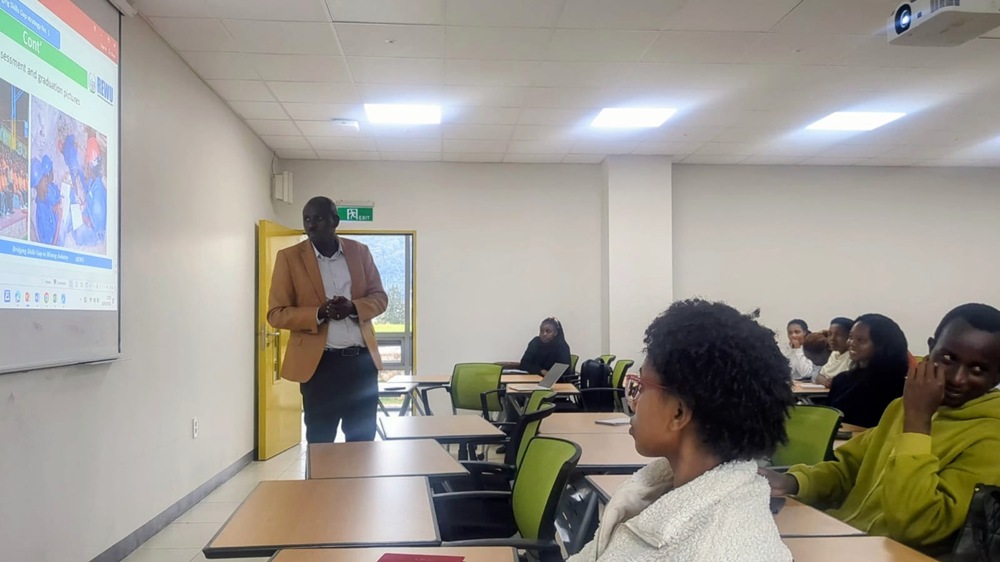
Speaking on the transformative nature of this program, Mutsindashyaka stated, “Recognition of Prior Learning allows experienced workers to obtain formal qualifications based on their work experience. Through competency assessments and practical evaluations, their skills can be officially recognized without requiring them to repeat training they have already mastered.” He emphasized that this formal recognition acts as a gateway to decent work, stating that it “enables informal workers to access employment, better working conditions… better wages, employment contracts, and social security.”
Upgrading Skills and Mentorship for the Future
While the RPL program is a massive leap forward, REWU acknowledges that it only recognizes existing practical knowledge and does not automatically ensure full competence-based certification under the Rwanda Qualification Framework (RQF).
“To achieve full professionalization, miners with RPL certificates must undertake upgrading training that bridges the gap between their prior learning and the competence standards defined under the RQF,” Mutsindashyaka told the audience. To this end, REWU is launching a bold initiative in 2026 to upgrade the skills of *300 RPL-certified miners* across 11 satellite centers, including Rutongo, Gamico, and Musha. These practical sessions will focus on critical modern practices such as safety, ore extraction, mineral processing, equipment handling, and environmental management.
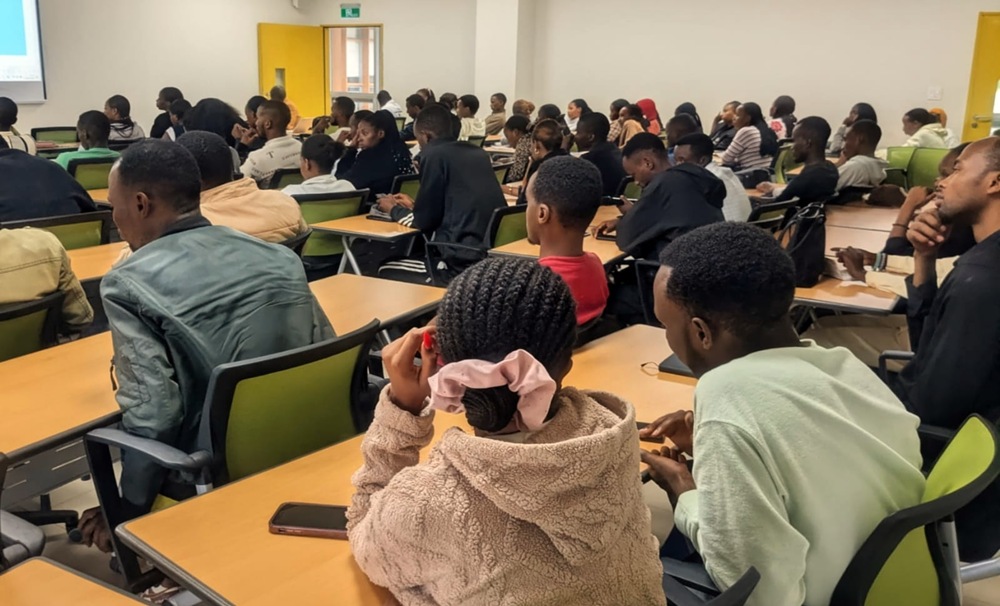
Furthermore, to ensure that the valuable institutional knowledge of older, experienced miners is not lost as they approach retirement, REWU is actively championing structured mentorship programs. Mutsindashyaka explained the value of this approach: “Through job shadowing and guided training, young engineers and technicians can learn practical insights that are difficult to obtain from textbooks alone.”
A Collaborative Path Forward
Addressing the university students, Eng. Mutsindashyaka stressed that modernizing the mining industry workforce requires a collaborative effort from all stakeholders. He issued a direct call to action, recommending that higher education institutions “expand industry partnerships” and “promote work-integrated learning” to ensure academic curricula align with actual industry needs. He also urged the government to strengthen technical education and asked mining companies to increase their investments in training and mentorship. Ultimately, these integrated efforts aim to improve productivity, occupational safety, and gender equity within the mining sector.
Summarizing the core mission of REWU’s ongoing initiatives, Mutsindashyaka concluded: “The modernization of the mining industry depends on developing a workforce that combines practical experience with formal education and technological competence. By integrating these elements, the mining sector can create a safer, more productive, and more sustainable decent work.”

Leave a Reply