

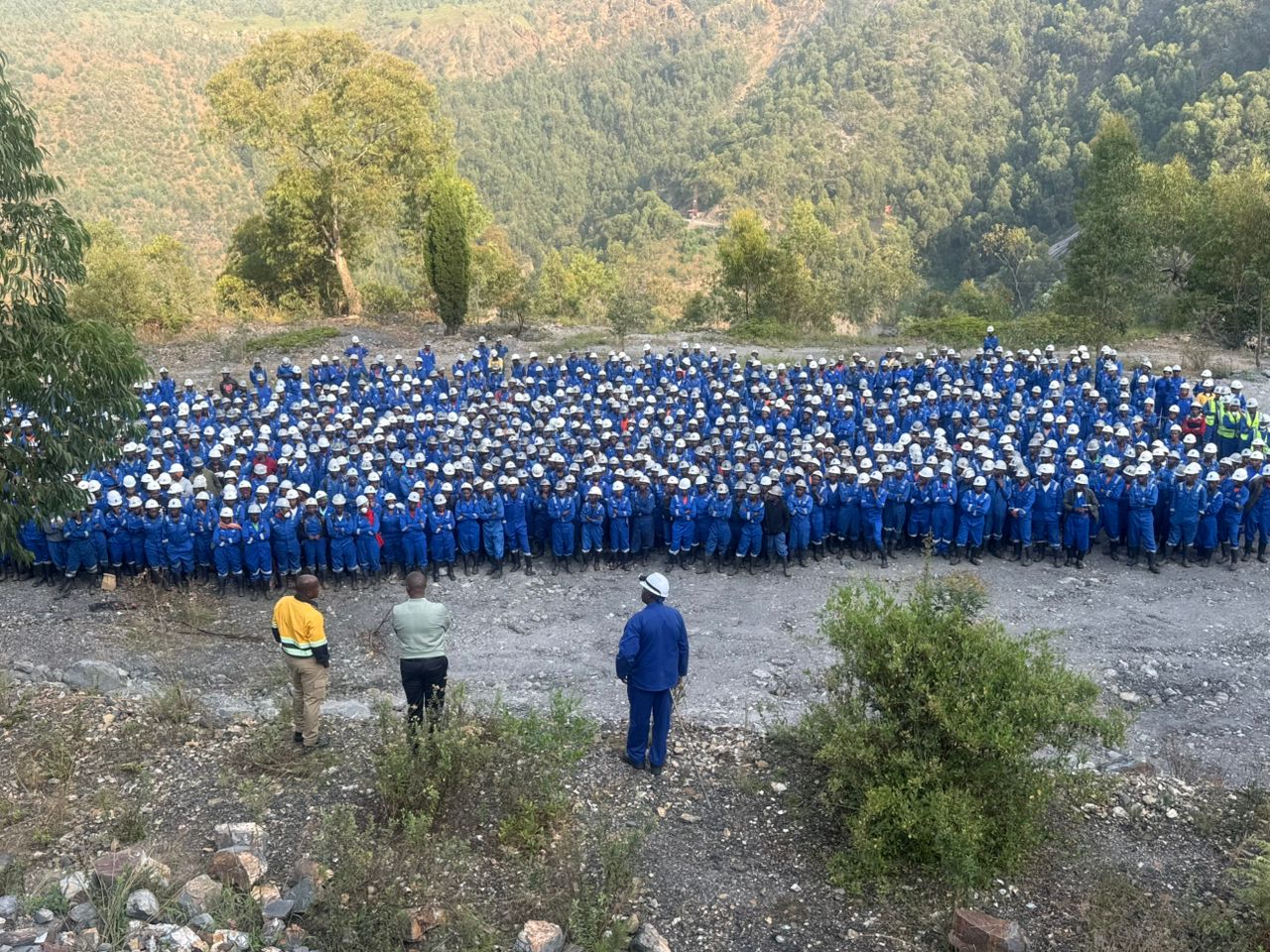
Rwanda is exploring a proposed climate insurance scheme that could help protect thousands of mining and quarry workers from income losses when heavy rains and other weather-related disruptions force them to stop work. The initiative seeks to provide workers with a financial cushion during climate-related interruptions, particularly those in casual and non-permanent employment who often receive no pay when operations are halted.
For thousands of mine and quarry workers in Rwanda, heavy rain does not only mean unsafe working conditions—it can also mean an immediate loss of income.
A proposed climate insurance initiative is seeking to change that by providing financial protection to workers whose earnings disappear when extreme rainfall makes mining operations unsafe or forces temporary closures.
The initiative was at the centre of a national stakeholder workshop held in Kigali on September 28, 2026, bringing together government institutions, regulators, mining companies, insurers, worker representatives and development partners to discuss how climate insurance can strengthen the resilience of mining workers.
Organised around the theme “Leveraging Climate Insurance to Strengthen the Resilience of Mining Workers in Rwanda,” the workshop followed demand and supply-side studies examining workers’ exposure to climate shocks, income losses, coping mechanisms, affordability and trust.
The evidence was drawn from 162 worker surveys, eight focus group discussions and 67 interviews, alongside consultations with four mining operators, two insurers, the Rwanda Extractive Industry Workers Union (REWU) and the Rwanda Mining Association (RMA).
When rain stops work, income stops too
The findings highlight a significant protection gap, particularly among casual and non-permanent workers.
Rwanda’s mining and quarrying sector employed about 92,000 workers as of August 2025, up from around 81,000 in 2024. At the same time, the sector generated US$1.75 billion in mineral export revenues in 2024, compared with US$373 million in 2017, and is targeting annual mineral export revenues of US$2.17 billion by 2029 under Rwanda’s National Strategy for Transformation (NST2).
Among surveyed workers affected by weather disruptions, 91.7% identified heavy rain as a major hazard, while the most common work interruption lasted three to five days
At casual-worker operations, 85.2% reported receiving no pay after a week away from work. As a result, workers often have to draw down savings or borrow money to meet household needs.
The survey found that 56.4% of affected workers borrowed money to cope with the shock, while 82.7% of borrowers paid interest.
The financial pressure extends beyond the individual worker.
The study found that 76% of surveyed workers rely on mining for all or most of their household income, while 52.5% reported having no other source of household income.
This means that when mining stops, the impact can quickly reach household spending on food, transport, school fees, healthcare and debt repayment.
What the proposed protection could mean for workers
Under the prototype discussed in the workshop, each enrolled worker would receive a fixed payment of approximately RWF 15,000 to RWF 25,000 per qualifying rainfall event, with a target of roughly one to two payouts per year.
The payment would be sent directly to the worker’s own mobile-money wallet or bank/SACCO account, with the proposed model targeting payment within 14 days of trigger confirmation.
The proposed worker contribution is currently being considered at around RWF 1,000–2,000 per month, with the remaining premium potentially supported by employers, cooperatives, donors or public co-financing. These figures remain working assumptions subject to further pricing, back-testing and regulatory decisions.
For workers already struggling to absorb short-term income losses, such a payment could provide liquidity at precisely the point when household finances are under pressure.
The survey suggests that the concept resonates strongly with workers. 99.4% of respondents said they would join the insurance scheme, although the study cautions that stated interest must still be tested against actual purchasing behaviour at a real price and under a real deduction arrangement.
The median maximum amount workers said they could afford was RWF 2,000 per month.
Rwanda’s mining sector is expanding rapidly, but the evidence presented at the workshop shows that many workers, particularly those paid by the day, remain exposed when climate shocks interrupt their livelihoods.
For a worker earning a few thousand francs per day, losing several working days can quickly become a household crisis. The proposed climate insurance model seeks to provide a financial buffer before that shock turns into debt, depleted savings or difficulty meeting essential household expenses.
REWU is committed to making this a reality by ensuring the product is built around workers’ realities: affordable enough to join, simple enough to understand, trusted enough to use, and fast enough to provide support when income suddenly stops.

Leave a Reply